Dating over 70 is the same activity it was at 50, meeting a life that is fully built. The feeling does not change with the decade. What changes is the calendar around it: commitments already booked, grandchildren, a house nobody intends to sell, and how far either person will drive.
The pool at this age is smaller and more local than the population makes it look, because being unpartnered and being interested are separate states. That distinction does more to explain a quiet month than anything about the reader.
What actually changes after 70?
Logistics, not feeling. Two established lives are being fitted together rather than built together, and each one predates the other person by decades.
Disclosure consequently arrives much earlier than it did at 40 — what a week actually contains, who else depends on you, what is already in the diary. Saying that out loud in the first week is not pessimism. For example, a standing Wednesday with grandchildren and a Wednesday walking group is the kind of collision that stalls a promising conversation at the third message if nobody names it, and takes ninety seconds to name.
The other change is tolerance. Being kept guessing reads as inconvenience rather than intrigue at this age, and most people stop responding to it far faster than they once did. That is a filter, and it works in your favour.
Where do first conversations at 70 come from?
Three routes, and there is no fourth. Dating platforms; structured settings where the same people return each week; and existing circles.
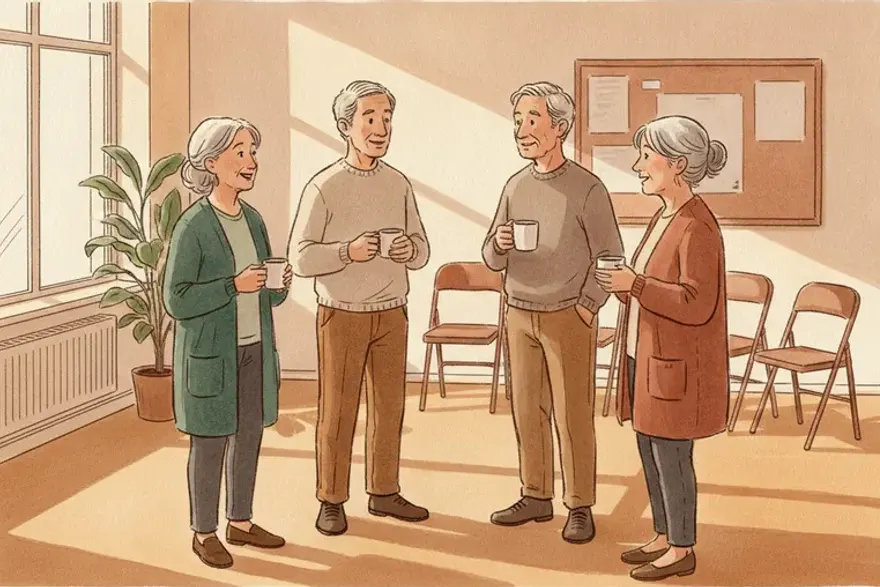
A structured setting is any arrangement that produces repeat contact without either person having to declare an intention — a class with a term, a volunteering rota, a choir, a walking group. It works because repetition does the job a first message has to do on a platform. Consider six Tuesdays of ordinary conversation with the same person: no one has been asked out, so no one has been rejected, and both of you now know something real.
Platforms produce more first conversations; repeat settings produce fewer, with far more context attached to each one. Running two routes at once beats perfecting either. Existing circles cost nothing and are the route people leave switched off, usually because asking feels like an announcement — “if you meet someone you think I would like, say so” is a complete sentence and it stays open for years.
Two figures set the scale of the band around you, and neither is a clean 70-and-over base because none is published. 36% of U.S. adults ages 65 and older say they are single — not married, not living with a partner and not in a committed romantic relationship — according to Pew Research Center in 2020. Of those, three-quarters are not looking for either a relationship or dates. Availability and interest are two different counts, and the second one is the pool.
Online is a minority route here, and knowing that in advance changes how a slow week reads. 12% of U.S. adults in their 70s and older say they have ever used an online dating platform, according to Pew Research Center in 2023 — ever used at any point, not currently using, and not met a partner there.
What should you establish before joining a platform?
Five things, all of which can be checked before any card details are typed: whether sign-up completes in a desktop browser without a smartphone, whether you can see real profiles before paying, whether there is a phone number a person answers, whether the text enlarges without the page falling apart, and whether a paid subscription can be cancelled without phoning anyone.
Those five are what the low-tech entry index is built to publish, each row carrying the date it was checked. No platform has been checked yet, so the index is empty, and that is stated rather than filled in from memory. How each check is carried out is on how we review.
Imagine the alternative version of this page — a ranked list assembled from other review sites. It would read better and age invisibly, and no line in it could be traced to anyone opening the product.
How common are scam attempts at this age?
Common enough to plan for, and the planning is cheap. 39% of online daters ages 65 and older say they have encountered someone they thought was trying to scam them, according to Pew Research Center in 2023. The base is people who use these platforms, and it is an encounter rate rather than a rate of anyone losing anything.
A romance scam is a sequence rather than a set of tricks: fast declarations, then a reason why meeting or appearing on video is impossible, then a move off the platform, then money. Recognising the shape early is what keeps it uneventful. The full pattern, the signs that only look like signs, and the official reporting routes are on red flags when dating in your 60s.
For the platform side of this section, see the best dating sites over 70. For what a first month actually looks like a few years earlier, see dating at 65. Every figure on this page is listed with its publisher, its year and the population it describes on the statistics page.
 Online Dating for Over 70: Best Sites and the Five Checks