Speed dating over 60 is a ticketed evening in which every attendee has one short, timed conversation with every other attendee and marks a card afterwards; the organizer passes on contact details only where two people ticked each other. People searching for speed dating over 60 near me are usually asking two questions at once: what happens at one of these evenings, and whether anything like it runs within driving distance. This page answers both, and is honest about the second — events for this age band are organized locally, by small operators, and they come and go. We do not run, endorse or list specific events, and we do not maintain a directory.
How does a speed dating event actually work?
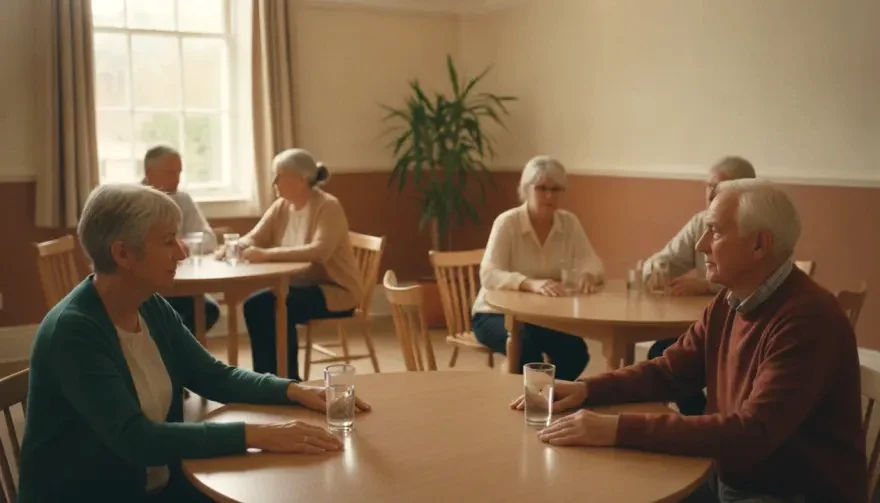
A rotation is the mechanism the whole format rests on: fixed tables, a timer, and everyone moving one seat when the bell goes. You book a place in advance, arrive to a badge and a number, and have a short conversation with each other attendee in turn — commonly a few minutes — until a bell or the host calls the change. You mark a card as you go, ticking the people you would be willing to see again. Afterwards the organizer compares cards and passes on contact details only where interest was mutual.
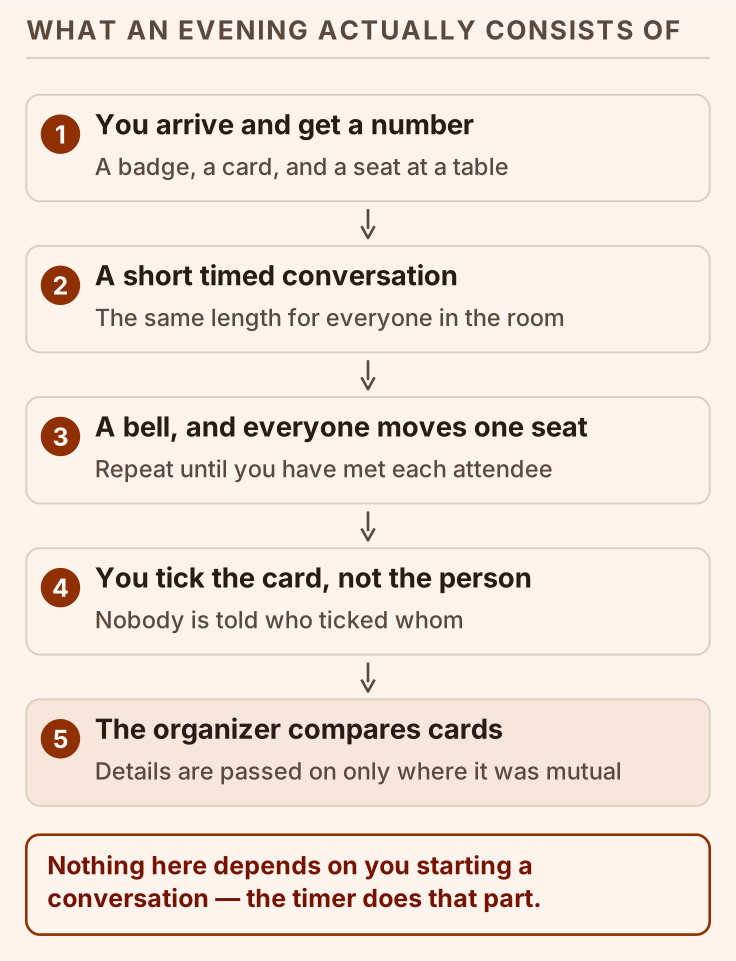
Three details matter more than the format itself. First, the age band is set by the organizer, and “over 60” in a listing sometimes starts lower than the label suggests — ask what it means. Second, numbers are balanced by design: organizers usually ticket the two sides separately so the room balances on the night, and one side often sells out first. Third, nobody leaves with your details unless you ticked them, which is the structural advantage this format has over meeting a stranger from a profile. For example, a person you would rather not see again simply does not appear on your list afterwards, and no message has to be sent to make that happen.
How do you find speed dating over 60 near you?
There is no national schedule of over-60 speed dating, so finding an event is a search method rather than a lookup. Work outward in this order, and expect to widen the radius to the nearest city.
- Event listing sites. Search your town, then the nearest large city, using both “speed dating” and the age band as separate terms. Listings are the fastest signal that an operator is active in your area at all.
- Community and activity organizations. Community centers, libraries, adult-education programs, social and hobby clubs, lifelong-learning groups and faith organizations often host singles evenings that are never listed on a ticketing platform.
- Local venues. Bars, restaurants and hotels with event rooms are where organizers rent space. Their own events page or bulletin board is frequently more current than any aggregator.
- Local press and local radio. The listings page of a local paper still carries events that never reach a national platform.
- Ask the organizer directly. Once you find one operator, ask what else runs in the region. This is a small trade and they know each other.
Consider calling before you book rather than after. Ask three things: the actual age range of people who attended the last event, how many places are sold per side, and what happens if the numbers do not balance on the night. An organizer who cannot answer the first question is guessing about their own event.
What should you expect on the night?
Expect an event room, a name badge, and less romance than logistics. You will repeat the same opening over and over, your voice will tire, and the room will be loud enough that hearing is a genuine constraint — ask for a table away from the speakers when you arrive rather than enduring it.
Bring a pen and read your own card between rotations, because the faces blur. Arrive early enough to park and to have a drink before the first bell; arriving flustered costs you the first conversations. Ticking a handful of names rather than a full card is how the format is meant to work, and a night that produces one mutual match has done its job.
An evening can also simply fail: a handful of people turn up instead of a full room, the age spread is wider than advertised, or nobody clicks. That is a bad night, not a verdict on you. The format’s only real promise is volume of first conversations in a short window.
Is speed dating better than a dating app?
Screening means the work of deciding who is worth a second conversation, and it is the one thing the two routes do at completely different speeds. Both end in the same place — a first conversation with a stranger — and they fail in opposite directions. Apps give you volume and no scarcity of choice, but demand screening and typing. An event gives you presence and body language in one evening, and then may not run again for months.
| Factor | Speed dating event | Dating platform |
|---|---|---|
| Availability | Local, irregular, often a city away | Available continuously, nationally |
| Screening | Done in person, in minutes | Done from a profile, over days |
| Effort | One evening, booked in advance | Repeated short sessions, ongoing |
| Cost | A ticket per event | Usually a monthly subscription |
| Contact details | Exchanged only on mutual interest | Held on the platform until you share more |
| Volume of people | Everyone in one room, then it ends | Large, and it does not end |
Comparison checked: September 8, 2026.
One structural advantage of the room is worth stating plainly: everybody in it turned up in order to date. That is not true of the age band at large — three-quarters of single U.S. adults ages 65 and older are not looking for either a relationship or dates, according to Pew Research Center in 2020. An event pre-filters for intent in a way no distance filter can.
The platform route is also thinner at this age than its reputation: 14% of U.S. adults in their 60s say they have ever used an online dating platform, according to Pew Research Center in 2023. “Ever used” is a low bar, and it still describes a minority — which is the honest argument for treating events and platforms as complements rather than as a choice.
If you want the platform side compared properly, that work lives on the dating sites hub, and the question of what “near me” actually means when the product is national is answered on singles dating over 60. If typing and small screens are the obstacle, the low-tech entry index sets out the five entry checks — desktop sign-up without a phone, browsing before paying, a phone answered by a person, text that enlarges cleanly, canceling without a call — and publishes each platform’s row with the date it was checked; no platform has been checked yet. How we arrive at any judgement about a platform is set out in how we review.
How do you meet strangers safely afterwards?
An event where a third party holds the room and the contact details is a comparatively safe first meeting. The exposure comes afterwards, when you arrange to see someone one-to-one: meet in a public place in daylight, use your own transport, tell someone where you are going, and keep your own phone with you.
The pattern to watch is money, and it arrives by message rather than in person. Among online daters ages 65 and older, 39% say they have encountered someone they thought was trying to scam them, according to Pew Research Center in 2023 — an encounter rate, not a rate of loss. Anyone who moves quickly to a private channel and then to a financial request is running that pattern, whether you met them on a platform or across a table.
If it happens, report it to the platform first, using its own report or block function, then to the U.S. Federal Trade Commission at ReportFraud.ftc.gov and to the FBI’s Internet Crime Complaint Center at ic3.gov. In Canada, the Canadian Anti-Fraud Centre takes reports online at reportcyberandfraud.canada.ca or on 1-888-495-8501, Monday to Friday, 10 am to 4:45 pm Eastern. Reporting routes checked September 8, 2026. The full pattern, including what is not a warning sign, is on red flags when dating in your 60s.
What does this page not do?
We do not organize events, take a commission on tickets, endorse operators, or keep a list of who is running what this month. Anyone claiming a complete national directory of over-60 speed dating is selling advertising. This page carries no affiliate link.